

Differences Between Traditional SEO vs GEO: What Content Strategies Need to Change
The debate around Traditional SEO vs GEO is growing louder after Google’s August 2025 spam update. Businesses are questioning what practices will still work and what will fail under new ranking systems. Traditional SEO helped websites climb search results for years, but GEO, or Generative Engine Optimization, is shifting the rules.
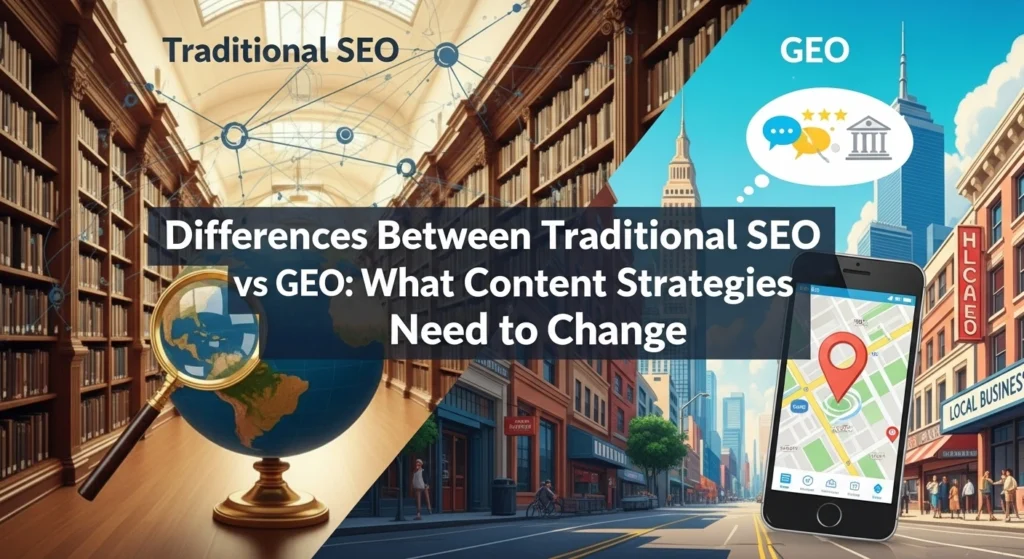
To stay visible, you need to understand where the two differ and how your content strategy must adapt.
What Traditional SEO vs GEO Means for Search
Traditional SEO vs GEO is about more than tactics; it is about how search itself functions. Traditional SEO focuses on optimizing content for search engines like Google by using keywords, backlinks, and on-page structure. GEO, on the other hand, is about optimizing content for generative engines such as Google AI Overviews, Perplexity, or ChatGPT search integrations.
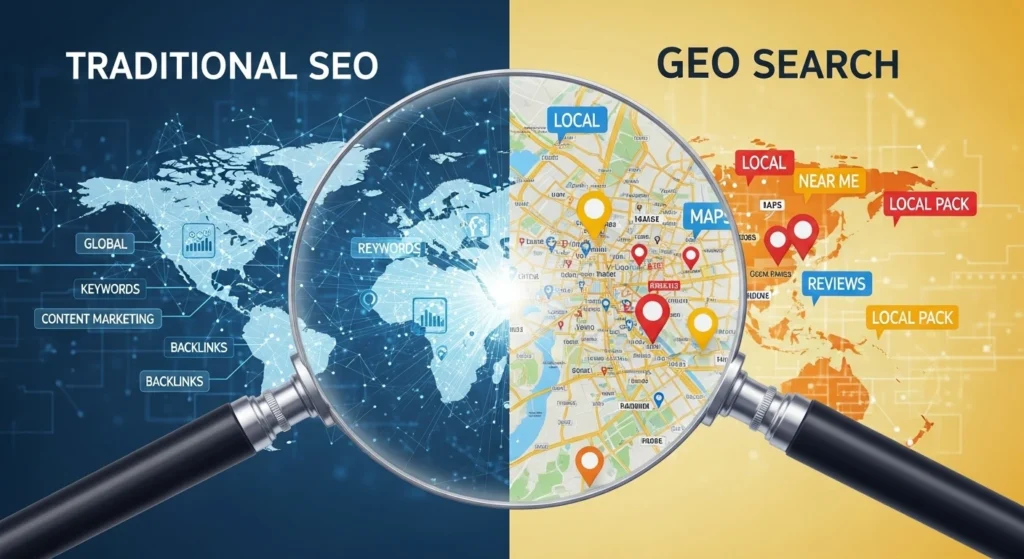
In Traditional SEO, ranking meant securing a spot on page one of Google. With GEO, your goal is to be cited or referenced inside AI-generated answers. This changes not only the type of content you create but also how you structure and present it.
Why Google’s Spam Update Matters
The August 2025 spam update highlights why understanding Traditional SEO vs GEO is urgent. Google’s systems now punish spammy tactics harder, especially those relying on keyword stuffing, duplicate service pages, or low-value AI content. GEO adds another challenge because AI engines pull from trusted, clean sources that meet high E-E-A-T (Experience, Expertise, Authoritativeness, Trustworthiness) standards.
If your content is sloppy or over-optimized, you risk losing traffic in both traditional search and generative results. To compete, you need content that balances the requirements of both systems.
Key Differences Between Traditional SEO vs GEO
1. Search Goals
- Traditional SEO: The Aim is to rank in the top 10 organic results.
- GEO: Aim is to appear in AI-generated answers or summaries.
Traditional SEO vs GEO shifts the spotlight from ranking positions to being included in conversational outputs.
2. Content Format
- Traditional SEO: Long-form articles, optimized metadata, and keyword placement.
- GEO: Concise, well-structured answers with clear context. Lists, FAQs, and definitions work best.
3. Authority Signals
- Traditional SEO: Backlinks were the strongest signal.
- GEO: Direct authority from subject-matter expertise, structured data, and verifiable references.
4. User Intent
Traditional SEO and GEO also change how intent is handled. In traditional SEO, you match keywords to queries. In GEO, you match context, tone, and clarity so the AI engine understands and reuses your content.
Content Strategies to Update
Build E-E-A-T into Every Page
Traditional SEO and GEO force you to raise trust signals. Add author bios, cite sources, and show proof of expertise. Google and AI engines reward sites that look credible.
Prioritize Clear, Structured Writing
Generative engines prefer scannable content. Use headings, bullet points, and short sentences. Break down answers into digestible parts. Your goal is not only ranking but also being quoted directly by AI search systems.
Create Multi-Format Content
Traditional SEO vs GEO is not limited to text. Include images, charts, and video transcripts. AI search pulls from multimodal sources. Adding alt text and schema increases your chance of selection.
Focus on Topical Authority
Instead of chasing hundreds of unrelated keywords, build clusters around a single subject. This helps both Google and AI engines see your site as the go-to resource.
Examples of Traditional SEO and GEO in Action
- A travel blog optimized traditionally ranks for “best hotels in Paris” with a long article.
- A GEO-optimized blog answers “Where should I stay in Paris near the Eiffel Tower?” with a short, structured section that AI engines can quote.
Traditional SEO and GEO show how user queries are shifting toward natural, conversational formats.
Avoiding Spam Traps After the August 2025 Update
Stop Thin Content
Pages with only swapped location names or repeated phrases are flagged as spam.
Eliminate Keyword Stuffing
Traditional SEO once tolerated high keyword density. GEO and Google’s new spam filters see this as low value. Keep your keyword natural, including Traditional SEO and GEO, while writing for people first.
Remove Fake Reviews and Low-Quality UGC
User-generated Content spam is now heavily penalized. If reviews or comments are manipulated, both Google and AI engines will ignore your site.
Why GEO is Growing Faster
Traditional SEO and GEO also reveal a timeline. Google still dominates search, but AI search adoption is rising. Perplexity and ChatGPT are being used by millions. As these tools spread, your content strategy must prepare for traffic shifts away from Google alone.
Practical Steps to Transition from Traditional SEO to GEO
1. Audit Your Content
Find pages with outdated tactics like keyword stuffing or duplicated content. Update them with fresh examples and context.
2. Add Structured Data
Schema markup helps both Google and AI engines parse your content. Focus on FAQ, Article, and HowTo schema.
3. Write for Conversations
Traditional SEO vs GEO requires you to write answers as if someone asked you directly. Short, precise responses have higher chances of being cited.
4. Update Old Pages for Spam Compliance
Run a full review of old blogs and remove spam signals. Google’s August 2025 update rewards sites that clean up past practices.
5. Monitor GEO Citations
Track how often your site appears in AI-generated summaries. Tools are emerging to measure this. Use them to see which content works.
Balancing SEO and GEO Together
Traditional SEO vs GEO is not about replacing one with the other. Both matter. Google is still the top source of traffic, but GEO is where the future is heading. To succeed, align strategies so they reinforce each other.
- Use SEO fundamentals like internal linking and keyword research.
- Use GEO techniques like conversational tone, structured answers, and credibility markers.
By combining both, you protect current traffic and prepare for new search formats.
Future Outlook of Traditional SEO vs GEO
The rise of GEO signals a shift from keyword-driven to intent-driven optimization. Generative engines want trusted, human-like answers, not keyword-heavy articles. Traditional SEO is still valuable, but GEO will dominate as AI search becomes part of daily browsing.
Websites that adapt now will lead. Those who cling to old methods risk losing visibility as spam updates tighten rules.
Final Thoughts
Traditional SEO vs GEO is no longer a debate for the future; it is happening now. Google’s August 2025 spam update confirms that low-value tactics are dead. GEO pushes you to create structured, trustworthy, conversational content. If you align with both, your site will rank higher, appear in AI search, and withstand the next wave of updates.
Explore more Blogs here.
Other Blogs:
Geo-Targeted Recovery: How to Regain Search Visibility
